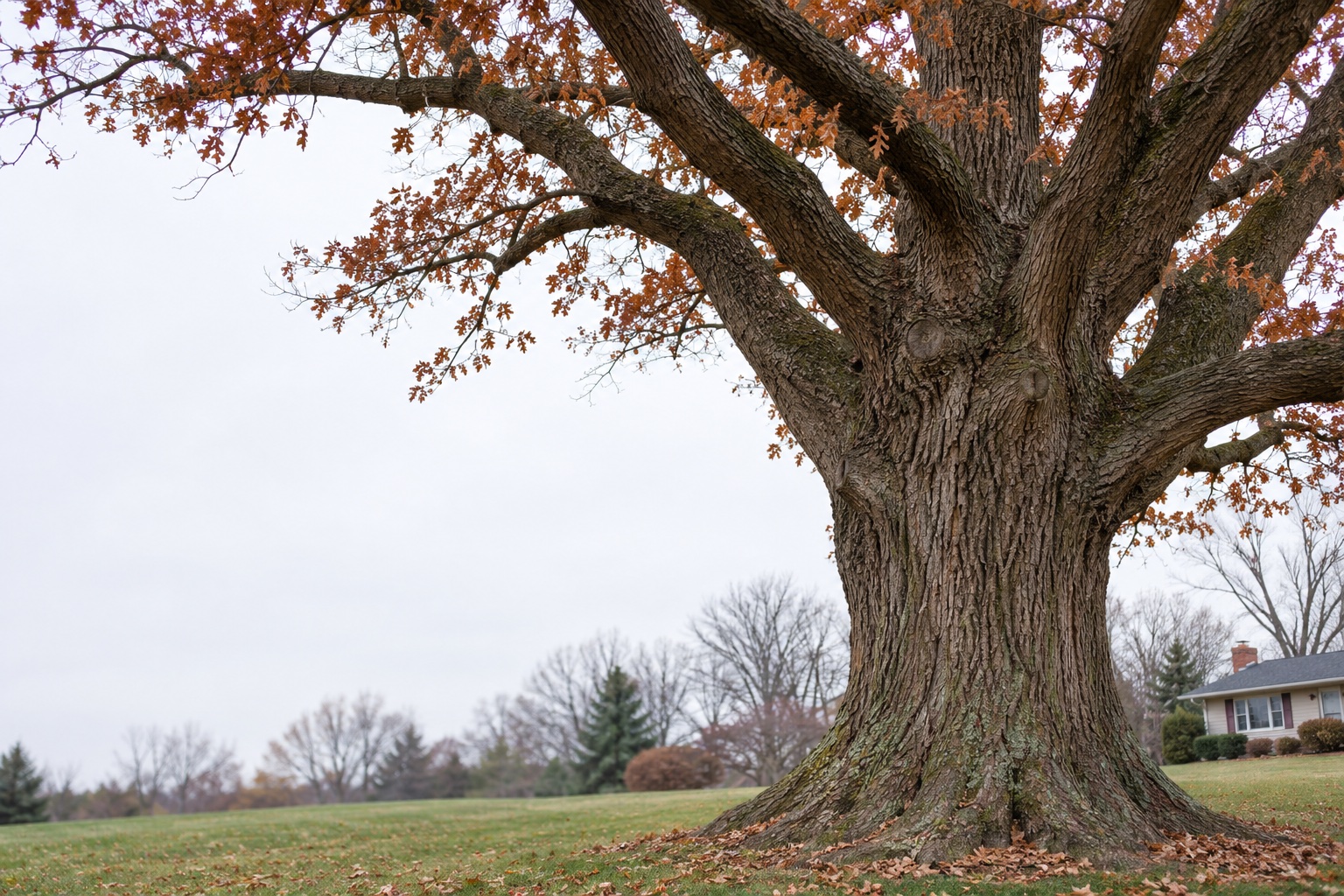
Generally, yes, when a covered event like a windstorm knocks a tree onto something your policy covers, such as the house, a garage or a fence. Generally, no, when the tree is still standing, or when it fell and hit nothing. The details depend on your policy, so treat this page as the usual pattern and your agent as the final word.
The four common cases
| What happened | Usual answer |
|---|---|
| A storm put a tree on your house, garage or another insured structure | Damage to the structure is covered, and removal of the tree is covered up to a limit |
| A storm put a tree on your fence | Missouri's insurance department includes fences among insured property for tree removal |
| A tree fell in the yard and hit nothing | Generally no coverage for removal |
| The neighbor's tree fell on your house | You claim on your own policy; ownership of the tree does not matter |
On the house, garage or fence
Missouri's Department of Commerce and Insurance says homeowners insurance "will only pay to remove a fallen tree if a storm caused it to fall and it damaged something your policy covers" (Missouri DCI, July 7, 2026). An earlier department guidance adds that it does not matter who owns the tree, only that it damages an insured building or fence (Missouri DCI, 2017).
In the yard, hitting nothing
If a fallen tree did not damage covered property, the Missouri department says the owner will probably pay for removal. A 2010 Insurance Information Institute release said the same, with one exception: some insurers may pay to remove a tree that blocks a driveway or a ramp for a person with a disability (III release, July 22, 2010).
A standing tree, even a dead one
Insurance is for damage that happens, not for removing a tree before it falls. A standing tree you want gone, dead or alive, is generally yours to pay for.
When the tree was already dead
This is where claims get harder. Missouri's insurance department says that if your tree was dead or diseased and you are accused of negligence for not removing it earlier, assigning responsibility for the damage is more complicated, and you should consult your agent (Missouri DCI). A 2010 Insurance Information Institute release noted that insurers sometimes go after the other side's insurer when a tree was in poor health or not properly maintained. A dead tree near your house or your neighbor's is cheaper to remove now than to argue about later; see dead and hazardous tree removal.
Limits on tree removal
Even when removal is covered, it is usually capped. Missouri's insurance department gives $500 as an example of a limit some companies set. A large tree on a house can cost more than that to remove, so check your own policy's debris removal section.
The neighbor's tree
- Their tree on your house: file with your own insurer. A 2010 Insurance Information Institute release said your insurer may then try to recover from the neighbor's insurer, and if it succeeds you may get your deductible back.
- Your tree on their house: in most circumstances, your neighbor files under their own policy, because your policy covers your home, not theirs (Missouri DCI).
What to document after a storm
The Missouri department's three steps:
- Inspect and document the damage once it is safe: photos or video of the house, vehicles and belongings before cleanup.
- Prevent further damage with reasonable temporary fixes, such as tarping a roof or boarding windows, and keep the receipts.
- File your claim as soon as possible with your insurer or agent.
From us, you get a written scope of the removal and our photos, which is what an adjuster usually wants to see. See a tree on your house for the removal itself and emergency and storm tree removal for the first hour.
Who to ask
Your agent or insurance company first. If you have trouble with a claim, the Kansas Insurance Department and the Missouri Department of Commerce and Insurance both run consumer help lines; find them on their websites (Kansas, Missouri).
This page explains how coverage usually works. It is not insurance or legal advice, and your policy's wording governs.
Insurance questions
Will insurance pay for removing a tree that is about to fall? Generally not. Coverage is for damage from a covered event, not for prevention. If the tree is a real risk, removing it now is the cheaper path.
Does it matter whether the storm was wind, ice or snow? A 2010 Insurance Information Institute release listed trees felled by wind or hail among the covered situations. For ice, snow or anything else, check the perils listed in your own policy.
Sources
- Missouri Department of Commerce and Insurance, guidance after holiday weekend storms, July 7, 2026.
- Missouri Department of Insurance, Winter Storm Guidance, January 13, 2017.
- Insurance Information Institute, I.I.I. provides information on insurance for fallen trees, July 22, 2010.
- Kansas Insurance Department, Storm and Flood.